
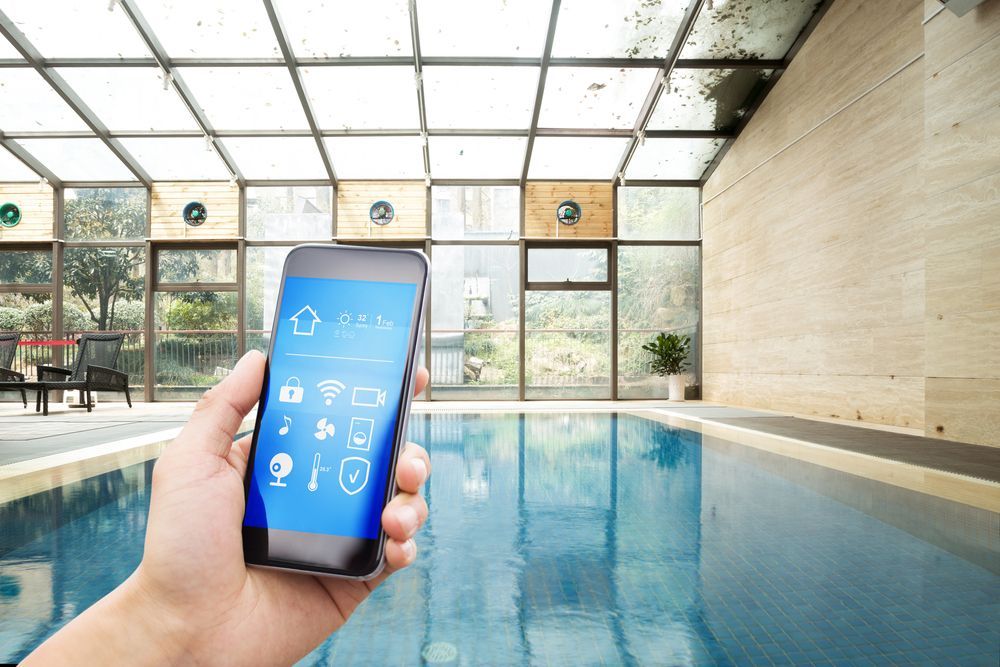
Control Every Pool Function From One Interface
Automation Installations in Jupiter for remote control of pumps, heaters, lighting, and water features without manual timers
Smart pool automation systems consolidate control of all electrical equipment into a single programmable interface accessible through wall-mounted panels, smartphones, or tablets. The technology replaces mechanical timers and individual switches with relay-based controls that communicate through low-voltage wiring or wireless protocols, allowing you to adjust pump speeds, set heating schedules, activate lighting scenes, and operate water features from anywhere. Eagle Pool Services installs these systems in Jupiter where homeowners manage increasingly complex pool setups that include variable-speed pumps, salt systems, heat pumps, LED lighting, and automated cleaners that each previously required separate programming.
Installation involves mounting a control panel near your existing equipment pad and running communication cables to each device you want to automate. The system assigns each piece of equipment to a programmable circuit, so your filtration pump might run on a custom schedule that ramps speed up during the day and down at night, while your heater activates only when water temperature drops below your threshold and your cleaner operates during off-peak electricity hours.
Schedule a system consultation to identify which equipment qualifies for automation and discuss integration with your home's existing smart devices.
What You Notice Once Automation Is Finished
Modern automation panels communicate with variable-speed pumps through digital protocols that allow speed adjustments in ten or twenty-five RPM increments rather than just on-off control. This precision matters for water features that require specific flow rates and for filtration cycles that need to balance energy savings with adequate turnover. In Jupiter's climate where longer filtration cycles combat algae growth during summer, automation lets you extend runtime without manually resetting timers or worrying about forgetting to turn equipment off.
Your pool management becomes entirely programmable, with the system executing schedules you configure once and then running indefinitely until you make changes. Lighting transforms from individual switches into coordinated scenes that activate multiple color zones simultaneously, and you can trigger all equipment from a single button press when unexpected weather arrives or when you want to prepare the pool for guests. The mobile app displays real-time equipment status, alerts you to errors like pump failure or heater lockout, and tracks energy consumption by device.
Advanced systems integrate with ORP and pH sensors to automate chemical adjustments, though this requires compatible dosing equipment and regular calibration. Most Jupiter installations focus on equipment control rather than full chemical automation because sensor accuracy depends on consistent water flow and frequent maintenance that many homeowners prefer to handle manually during weekly service.
Homeowners considering automation want to understand which features provide the most practical value and how installation affects existing equipment.
Common Questions About This Service
What existing equipment can be integrated into an automation system?
Any electrically powered device that currently uses a timer, switch, or manual control qualifies, including pumps, heaters, chlorinators, lighting, water features, and valve actuators. Older equipment without digital communication still functions through basic on-off relay control.
How does the system communicate with equipment that's spread across the pool pad?
Low-voltage control wiring connects the main panel to each device, running through conduit alongside existing electrical lines. Wireless systems use radio frequency modules installed at each equipment location, eliminating the need for additional wire runs.
Why do some automation systems require professional configuration while others offer plug-and-play setup?
Advanced systems with variable-speed pump integration and multi-circuit lighting require programming flow rates, voltage settings, and communication protocols specific to each manufacturer. Basic relay controllers simply replace timers without complex calibration.
What happens if the automation panel fails or loses power?
Equipment reverts to manual operation using built-in controls on each device, though programmed schedules stop running. Most panels include battery backup that maintains programming during brief outages, and cloud-based systems restore settings automatically when connectivity returns.
How does automation affect energy costs in Jupiter's year-round swimming climate?
Variable-speed pump control provides the largest savings by reducing filtration speed during low-demand periods, and scheduled heater operation prevents unnecessary runtime when the pool isn't in use. Most installations recover equipment costs within two to four years through reduced electricity consumption.
Eagle Pool Services handles complete automation installations from panel mounting through device integration and app configuration. Contact us to assess your current equipment compatibility and receive a detailed proposal outlining system capabilities and projected efficiency improvements.