
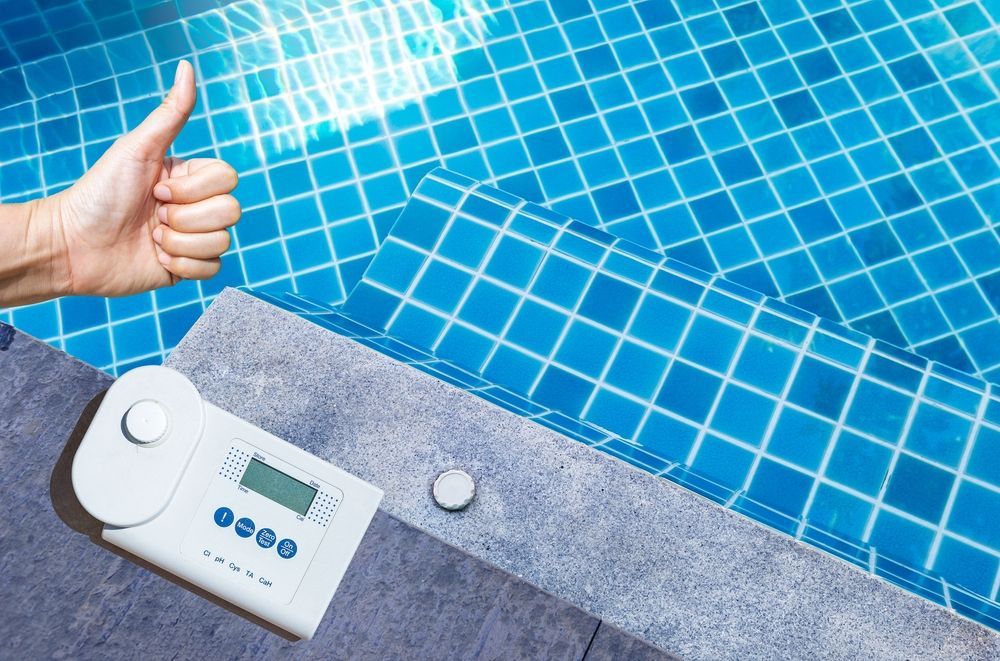
Water Chemistry That Adjusts Itself Continuously
ORP Installations in Jupiter for automated sanitation control in high-use residential pools without daily testing
Oxidation-reduction potential systems measure the sanitizing effectiveness of your pool water in real time using a probe that detects electron exchange at the molecular level, providing a more accurate representation of disinfection capacity than traditional chlorine test strips. The technology monitors ORP in millivolts, with readings between six hundred fifty and seven hundred fifty millivolts indicating proper sanitation, and triggers automated chlorine dosing or UV lamp activation when levels drop below your programmed threshold. Eagle Pool Services installs ORP controllers throughout Jupiter for pools that experience heavy bather loads, rapid chlorine consumption from intense sun exposure, or inconsistent chemistry from manual testing schedules that miss fluctuations between weekly service visits.
The system integrates with salt chlorine generators, liquid chlorine feeders, or UV sanitizers by reading water conditions continuously and activating equipment only when ORP drops below the setpoint. This precision prevents both under-sanitization that allows algae growth and over-chlorination that causes skin irritation and equipment corrosion.
Arrange an equipment assessment to determine whether your current sanitization system supports ORP integration and review probe placement options for accurate readings.
Why ORP Monitoring Works for Sanitation Control
Installation requires mounting the ORP probe in a flow cell that receives a constant water sample from your return line, ensuring the sensor reads actively circulating water rather than stagnant pockets that don't represent pool conditions. The controller connects to your chlorine generator or chemical pump through relay wiring, creating a feedback loop where dropping ORP triggers increased chlorine output and rising ORP reduces or stops production. Florida's intense UV exposure breaks down chlorine faster than in northern climates, which is why automated monitoring in Jupiter prevents the sudden chemistry crashes that occur when manually dosed chlorine depletes between service visits.
You'll notice water clarity remains consistently high because the system responds to contamination immediately rather than waiting for visible algae or cloudiness to develop. Manual testing shifts from daily chlorine checks to weekly ORP calibration using reference solutions, and the controller's display shows real-time millivolt readings so you can verify sanitation levels at a glance. The probe requires cleaning every month or two to remove calcium deposits and biofilm that interfere with electrical conductivity, but this maintenance takes minutes compared to the time saved on constant chemical adjustments.
Advanced systems combine ORP monitoring with pH control using a separate probe and acid dosing pump, creating fully automated chemistry management. However, pH sensors drift faster than ORP probes and require more frequent calibration, which is why many homeowners start with ORP-only systems before adding pH automation. The technology doesn't eliminate the need for occasional manual testing, but it maintains sanitation between tests far more precisely than timers or fixed chlorinator output settings.
Residential pool owners considering ORP systems want to understand how the technology improves on traditional chlorination methods and what ongoing maintenance involves.
What Property Owners Usually Ask
What causes ORP readings to drop suddenly even when chlorine levels appear adequate on test strips?
ORP measures actual sanitizing power, which includes chlorine concentration and pH level, while test strips only detect total chlorine. Water with high chlorine but improper pH shows low ORP because the chlorine exists in less effective chemical forms.
How does the probe distinguish between different types of sanitizers like chlorine and bromine?
The sensor detects oxidation potential regardless of chemical source, so it works with any sanitizer that creates measurable electron transfer. Bromine, ozone, and UV systems all register on ORP scales, though target ranges vary slightly by sanitizer type.
Why do ORP systems require flow cells instead of mounting probes directly in the pool?
Probes need consistent water flow across the sensor surface to generate accurate readings, and in-pool mounting exposes them to debris, temperature fluctuations, and physical damage. Flow cells provide controlled sample conditions that improve measurement reliability.
What happens when the probe needs replacement or recalibration during peak pool season?
Controllers typically include alarm functions that alert you to probe failure or calibration drift before readings become unreliable. Replacement probes install in minutes using threaded fittings, and most residential systems use standardized probe designs compatible across multiple controller brands.
How does Jupiter's water chemistry affect ORP system performance compared to other regions?
High calcium hardness and total dissolved solids from groundwater sources accelerate probe fouling, requiring more frequent cleaning than in areas with softer water. However, the consistent warm temperatures improve sensor response time and reduce seasonal calibration drift.
Eagle Pool Services configures ORP systems to work with your existing sanitization equipment and provides calibration training so you can maintain accurate readings throughout the season. Request a detailed installation quote that includes probe placement recommendations and integration specifications for your current pool setup.